















We're raising money for the Isle of Wight Branch of the MND Association
Autumn Budget 2026
Thursday 29th October 2026And breathe …?
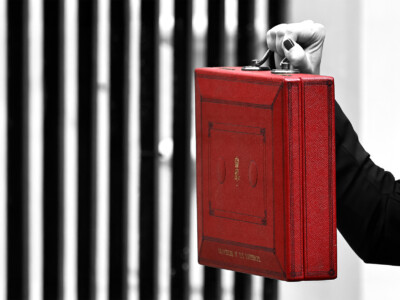
Announced as a ‘breathing space Budget’ that will provide ‘hope for the future’ this was a key moment in new Chancellor, John Healey’s, political career. Although by no means a fresh face in the Treasury, according to the Office for Budget Responsibility (OBR) he faced a ‘challenging and uncertain outlook’ given current geopolitics.
Acknowledging the OBR’s announcement that the UK faced an additional £14bn in debt interest this year, Mr Healey said he had to chart a course through an uncertain time and that fiscal discipline was needed. He confirmed the Budget kept within the Government’s own fiscal rules – that day-to-day spending must be covered by tax receipts – and that to maintain stability he was using the fiscal headroom created by his predecessor, Rachel Reeves, to absorb some of the impact of the war in the Middle East. This headroom will be £15bn in 2029/30 and £20bn in 2030/31 according to the OBR.
Although there was a lockdown imposed on MPs regarding leaking policies there was really only one announcement that hadn’t been ‘trailed’ and Labour MPs had been told to expect a ‘low key fiscal event’ with the main decisions coming in the spending review.
In terms of defence spending the Chancellor announced a further £10bn of help for Ukraine and a roadmap for getting defence spending to 3% by 2030. But Mr Healey’s main aim was to give people ‘breathing space’ from the onslaught of rising household costs.
He started with energy and announced a series of measures to try to cut bills both in the present, with the surprise of £100 energy payment to around 20 million households in council tax bands A to D to be paid directly into bank accounts, and for longer term planning. He announced an extension to the VAT cut on energy bills until July next year and confirmed that the Government is abolishing the standing charge on gas bills, with a similar plan to follow for electricity.
Further measures to help households included continuing the freeze on fuel duty and increasing the higher mileage rate for people who use their cars for work. Another was the confirmation that import tariffs would be removed from more than 100 supermarket products from baked beans to gherkins and chocolate.
In terms of business and personal taxes, new funding will allow HMRC to improve compliance and give stronger powers to collect overdue tax from those who ‘can clearly afford to pay but ignore repeated contact.’ There will also be no change on tax on income from dividends or from employment. There was also confirmation that banks would face an increase (3% for 15 months from January) on the bank surcharge.
For savers, he reversed the decision to cut the cash ISA limit, so it remains at £20,000, and cut the Lifetime ISA (LISA) withdrawal penalty from 25% to 20% for those buying homes above the current £450,000 property-price limit. He also confirmed plans to replace the LISA with a new First-Time Buyer ISA.
With help for low-income pensioners, the high street (through changes to business rates, and targeting online retailers for VAT), and devolution of tax receipts plus other measures for regional bodies and mayors, Mr Healey laid out his announcements as a Budget for ‘workers, sole traders and parents’ across the UK, that would chart a course through very unsettling times and deliver hope.
Leader of the Opposition, Kemi Badenoch declared it didn’t come close to meeting the challenge of addressing the ‘out of control’ welfare bill and that it was ‘not good enough, not strong enough and not bold enough’. Only time will tell whether she’s correct.
Here are the main points:
Pensions
State Pension Triple Lock changes from April 2030
Under the current Triple Lock, the basic and new State Pensions increase each year by the highest of average earnings growth, CPI inflation and 2.5%. From April 2030, the mechanism will change so that increases will instead be based on the highest of CPI inflation, 2.5%, and the amount needed to ensure the state pension keeps up with average earnings growth since the introduction of the new policy.
Pensions and IHT from 6 April 2027
Most unused pension funds and pension death benefits will fall within the estate for IHT purposes for deaths occurring on or after 6 April 2027. The Budget includes a minor technical amendment allowing those administering an estate to decide whether notional pension property is included in the general component of the estate or a separate component when calculating entitlement to the reduced 36% IHT rate where sufficient assets pass to charity.
Normal Minimum Pension Age rises to 57 from 6 April 2028
Subject to protected pension ages and other exceptions. This remains an important cash-flow consideration when planning retirement or bridging the period before pension benefits become accessible.
Pension salary sacrifice NIC restriction from 6 April 2029
Only the first £2,000 a year of employee pension contributions made through salary sacrifice will retain the NIC advantage. Salary-sacrificed pension contributions above £2,000 will attract employee and employer NIC. Importantly, this is not a £2,000 restriction on salary sacrifice or pension contributions themselves. Contributions can still exceed £2,000, but the NIC advantage on the excess will be lost.
Changes announced in this Budget
Two-year rule for pension death benefits
Legislation will remove the two-year rule under which otherwise tax-free pension and lump-sum death benefits could become taxable solely because payment (or designation) was made more than two years after the scheme administrator first knew, or could reasonably have been expected to know, of the member’s death. The change applies to relevant payments made on or after 28 October 2026.
Terminal illness and pension access
Legislation will allow a serious ill-health lump sum to be paid where a member can reasonably be expected to live for less than one year. It will apply to uncrystallised rights irrespective of whether the member has reached age 75. Medical evidence will also be able to be provided by an overseas registered medical practitioner where the member lives in the country in which the practitioner practises. The change takes effect from Royal Assent of Finance Bill 2026-27.
Tax on excess lump-sum death benefits
The process for taxing lump-sum death benefits exceeding the deceased’s available Lump Sum and Death Benefit Allowance (LSDBA) will change. Where a member dies before age 75, the excess will no longer be treated as pension income of the individual beneficiaries. Instead, a tax charge will be raised on each beneficiary’s share of the excess by reference to their marginal Income Tax rate for the year in which the lump sum was paid. The legislation will also address the interaction between Income Tax and IHT. Different elements of the measure have different effective dates, including retrospective provisions applying to relevant lump sums paid from 6 April 2024.
DB scheme surplus payments
From 6 April 2027, DB occupational pension schemes will be able to make direct payments of surplus assets to members where permitted by the scheme rules and subject to trustee discretion and statutory conditions. Qualifying payments will be taxed as pension income.
Taxation
Savings and property income
- Savings Income Tax rates increase from 6 April 2027 to:
– 24% basic rate
– 44% higher rate
– 49% additional rate
– 49% trust rate for discretionary trusts
The Personal Savings Allowance and starting rate band for savings remain unchanged.
- Investment bonds: the savings-rate changes also have implications for the taxation of life assurance business and investment bond gains. Advisers will therefore need to revisit assumptions used when comparing onshore and offshore bonds from 2027/28.
- Property Income Tax rates in England, Wales and Northern Ireland will increase from 6 April 2027 to:
– 24% basic rate
– 44% higher rate
– 49% additional rate
– 49% trust rate for discretionary trusts - Income Tax ordering rules: consequential changes from April 2027 will affect how allowances and reliefs are allocated between different categories of income following the introduction of separate savings and property rates.
Pension Tax Allowance
- New Pension Tax Allowance from 6 April 2027: this is intended to prevent pensioners whose total income is no more than the full new State Pension from having to pay small amounts of tax through Simple Assessment. It will operate in 2027/28, 2028/29 and 2029/30.
- For 2027/28, the threshold below which the full allowance applies is £13,037 and it is fully withdrawn at £13,319. The allowance is withdrawn at £1 for every £3 of income above £13,037.
Property
High Value Council Tax Surcharge: from April 2028, an additional charge will apply to residential properties in England valued at £2 million or more. This will be relevant when modelling ongoing expenditure for clients who are property-rich but potentially income- or cash-poor in retirement.
Thresholds
Frozen thresholds and allowances: advisers should continue to factor fiscal drag into longer-term financial planning, including the continuing freezes affecting Income Tax thresholds, the IHT nil-rate bands and ISA limits.
CGT and business owners
- Business Asset Disposal Relief (BADR): the lifetime limit will reduce from £1 million to £500,000 for qualifying disposals, effective from 6 April 2027. This could make the timing of business disposals particularly important for qualifying clients.
- Founders’ Relief: a new relief will provide a 10% CGT rate on up to £10 million of qualifying lifetime gains on eligible disposals of shares or securities from 6 April 2027. It is targeted at founders and early investors who have made a significant long-term contribution to qualifying high-growth, innovative UK companies.
- Trading Allowance: increases from £1,000 to £3,000 from 6 April 2027. The Self Assessment trading income reporting threshold will also increase to £3,000.
Employment taxation
- Mandatory payrolling of Benefits in Kind: the introduction will be phased:
– Company cars and vans, car and van fuel and medical benefits from 6 April 2027
– Most other Benefits in Kind from 6 April 2028
Investments and ISAs
- Cash ISA restriction scrapped: the previously announced proposal to restrict Cash ISA subscriptions for individuals under age 65 to £12,000 a year from 6 April 2027 will no longer proceed.
- Starter Investment ISA: the Government will work with the investment industry on a possible new ISA incentive for people investing in a Stocks & Shares ISA for the first time. The detailed design has yet to be developed.
- Lifetime ISA: the withdrawal charge where a first home costs more than the existing £450,000 LISA property limit will be reduced from 25% to 20%. The 25% charge will continue to apply to other unauthorised withdrawals.
- First Time Buyer ISA: a new product will replace the Lifetime ISA for new savers. It will provide a 25% Government bonus on the final account balance, subject to a maximum bonus of £20,000, towards the purchase of a first home worth up to £450,000. Existing LISA holders will be able to continue contributing to and using their accounts under the existing rules. Launch is scheduled for April 2029.
- Help to Save: the scheme will be made permanent and eligibility widened from April 2028 to include Universal Credit claimants receiving the child element, caring element or both.
- Employee share schemes: changes will be made to both the CSOP and EMI regimes from 6 April 2027. In particular, the individual CSOP option limit will increase to £120,000, alongside other changes to the operation of the two schemes.
Other announcements
Other announcements that may be relevant to individual clients include:
- A new equity-loan scheme for first-time buyers
- Increases to the National Minimum Wage and National Living Wage from April 2027
- A further freeze in fuel duty
- Changes to domestic energy charges
- Future reform of the Carer’s Allowance earnings cliff edge, and
- The introduction of statutory parental pay for eligible self-employed individuals
For further detail, see the Government’s Budget 2026: Overview of tax legislation and rates.